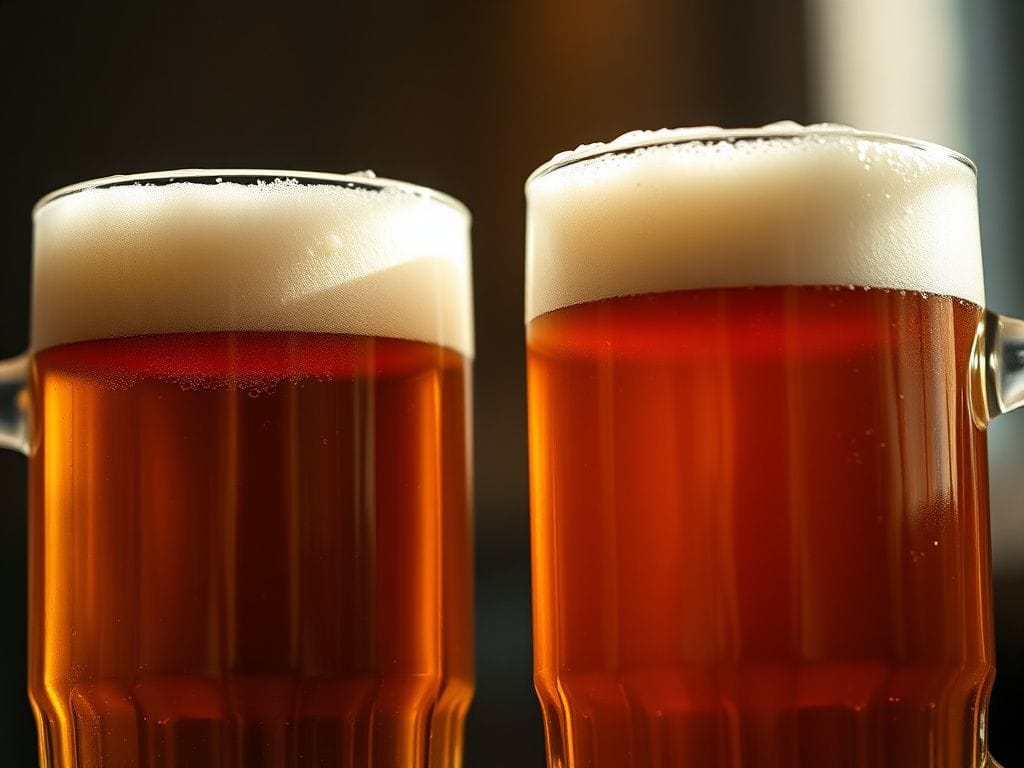
Forget the internet chatter. While often conflated, Saccharomyces cerevisiae US-05 and WLP001 are demonstrably distinct strains. Their divergence stems from nuanced genetic variations, manifesting in unique morphological attributes and physiological behaviors under identical fermentation conditions. Understanding these differences is crucial for precise recipe formulation and consistent beer production.
Yeast Morphological and Physiological Comparative Analysis
| Characteristic | Saccharomyces cerevisiae US-05 (Fermentis) | WLP001 California Ale Yeast (White Labs) | Morphological/Physiological Impact | Observed Brewing Difference |
|---|---|---|---|---|
| Cell Size/Shape | Average 5-7 µm, ovoid to ellipsoid. Often displays slightly higher pleomorphism under stress. | Average 6-8 µm, consistently ovoid. More uniform cell population. | Variations in surface-to-volume ratio affect nutrient uptake kinetics and stress resistance. Uniformity impacts viability assessments and pitching consistency. | US-05 can exhibit slightly faster initial growth kinetics due to potentially higher surface area to volume ratio in some cells; WLP001 offers more predictable cell mass per volume. |
| Flocculation Rate | Medium-Low. Tends to remain in suspension longer, settling slowly post-fermentation. | Medium-High. Forms compact aggregates, settles more rapidly and cleanly. | Genetic variations in FLO genes (e.g., FLO1, FLO5, FLO11) and cell wall mannoprotein composition dictate cell-to-cell adhesion. | US-05 often requires longer conditioning for clarity, potentially leaving more yeast in suspension. WLP001 produces clearer beer more quickly, easier to crop. |
| Attenuation Profile | High (79-84%). Efficient utilization of maltotriose. | Medium-High (75-80%). Efficient utilization of maltose, slightly less efficient with maltotriose than US-05. | Differences in specific glycoside hydrolase activity (alpha-glucosidase) and membrane transport proteins (maltose permease, maltotriose permease). | US-05 typically yields drier beers with lower terminal gravity. WLP001 leaves slightly more residual sweetness and body. |
| Ester Production | Low to Medium. Can produce slightly more isoamyl acetate and ethyl acetate under warmer conditions or insufficient pitching. | Very Low to Low. Known for its exceptionally clean profile, minimal ester production even at warmer temps. | Differential expression and activity of alcohol acyltransferases (AATases) and esterases. Genetic variations impacting fatty acid metabolism. | US-05 can contribute a subtle fruity character (apple, pear) in specific conditions. WLP001 provides a blank canvas, allowing malt and hop character to dominate. |
| Phenol Production | Non-phenolic (POF-). | Non-phenolic (POF-). | Absence of the PAD1 and FDC1 genes responsible for ferulic acid decarboxylation. | Neither strain produces clove-like or medicinal phenolic off-flavors. |
| Diacetyl Reduction | Efficient. Rapid uptake and reduction of diacetyl. | Efficient. Rapid uptake and reduction of diacetyl. | High activity of diacetyl reductase enzymes. Efficient transport of alpha-acetolactate from wort into cells. | Both strains typically require minimal diacetyl rest, but WLP001 can sometimes clear faster under stress due to overall metabolic robustness. |
| Optimal Fermentation Temperature | 18-28°C (64-82°F) for full attenuation. Cleaner at lower end. | 18-22°C (64-72°F) for clean profile. Can tolerate higher, but off-flavors more likely. | Membrane fluidity, enzyme stability, and heat shock protein (HSP) expression differ. | US-05 offers broader temperature versatility while maintaining relatively clean profile. WLP001 demands tighter temperature control for desired neutrality. |
| Stress Response (Ethanol/Osmotic) | Good ethanol tolerance (up to 10-12% ABV). Moderate osmotic stress resilience. | Excellent ethanol tolerance (up to 12-15% ABV). Superior osmotic stress resilience. | Variations in trehalose and glycerol synthesis, cell wall integrity, and membrane lipid composition. Dry yeast processing also influences initial stress resilience. | WLP001 is often preferred for higher gravity beers or challenging wort compositions due to its robust nature. US-05 performs well but can be more susceptible to stalling in extreme conditions. |
| Genetic Markers | Distinct SNP profiles from WLP001, despite shared lineage. Genetically optimized for dry yeast production. | Specific SNP markers, often linked to flocculation and esterase activity, differentiate it from other ‘Chico’ lineage strains. | Minor genetic variations accumulate over generations of propagation and selection, leading to distinct phenotypes. | These subtle genetic differences are the ultimate drivers of all observed phenotypic variations. |
| Cell Wall Composition | Potentially slightly lower glucan/mannoprotein ratio compared to WLP001, contributing to lower flocculation. | Higher and more stable glucan/mannoprotein ratio, promoting stronger cell-to-cell adhesion and robust structure. | Affects flocculation, porosity, antigenicity, and interaction with various wort components and fining agents. | Directly impacts clarification rates and potential for yeast harvesting efficiency. |
Fermentation Kinetics and ABV Calculation Discrepancy
The perceived similarity of US-05 and WLP001 often leads to assumptions regarding identical final gravities (FG) and alcohol by volume (ABV). However, their distinct attenuation profiles mandate separate calculations for precision.
Consider a standard American Pale Ale wort:
- Original Gravity (OG): 1.055
Calculation for US-05:
- Typical Attenuation: 82%
- Estimated Final Gravity (FG_US05): OG – [(OG – 1.000) * Attenuation]
- FG_US05 = 1.055 – [(1.055 – 1.000) * 0.82]
- FG_US05 = 1.055 – [0.055 * 0.82]
- FG_US05 = 1.055 – 0.0451
- FG_US05 = 1.0099 (approximately 1.010)
- Estimated ABV_US05 = (OG – FG_US05) * 131.25
- ABV_US05 = (1.055 – 1.0099) * 131.25
- ABV_US05 = 0.0451 * 131.25
- ABV_US05 = 5.92%
Calculation for WLP001:
- Typical Attenuation: 78%
- Estimated Final Gravity (FG_WLP001): OG – [(OG – 1.000) * Attenuation]
- FG_WLP001 = 1.055 – [(1.055 – 1.000) * 0.78]
- FG_WLP001 = 1.055 – [0.055 * 0.78]
- FG_WLP001 = 1.055 – 0.0429
- FG_WLP001 = 1.0121 (approximately 1.012)
- Estimated ABV_WLP001 = (OG – FG_WLP001) * 131.25
- ABV_WLP001 = (1.055 – 1.0121) * 131.25
- ABV_WLP001 = 0.0429 * 131.25
- ABV_WLP001 = 5.63%
Resulting Difference:
- FG Difference: 1.012 – 1.010 = 0.002 points
- ABV Difference: 5.92% – 5.63% = 0.29%
This seemingly minor 2-point difference in final gravity translates to nearly 0.3% ABV. Such a deviation is significant for consistency, especially when targeting specific style guidelines or batch-to-batch repeatability. The US-05 batch will be noticeably drier and slightly more alcoholic than the WLP001 batch from the same wort, impacting mouthfeel, sweetness perception, and overall balance. This highlights why understanding intrinsic yeast characteristics is paramount for optimal fermentation strategies.
Deep Dive: Dissecting the Divergence – Why US-05 and WLP001 Are Not Identical
The brewing industry, often driven by pragmatic efficiency, frequently categorizes Saccharomyces cerevisiae US-05 and WLP001 as functionally interchangeable “Chico” strains. This oversimplification, while convenient, ignores fundamental biological and physiological distinctions that profoundly impact beer character and fermentation kinetics. As master brewmasters, our responsibility is to operate with precision. This deep dive will systematically dismantle the myth of their identity, exposing the nuanced differences that demand distinct handling and application.
1. Genetic Lineage vs. Phenotypic Drift:
Both US-05 and WLP001 originate from a common lineage, often traced back to the historic Sierra Nevada Pale Ale strain (allegedly from Ballantine’s India Pale Ale culture). This shared ancestry explains their superficial similarities, such as clean flavor profiles and good attenuation. However, decades of independent propagation, industrial scaling, and proprietary selection processes by Fermentis (for US-05) and White Labs (for WLP001) have led to significant genetic divergence. Yeast, like all living organisms, undergoes continuous mutation and adaptation. Each company’s specific growth media, fermentation parameters during propagation, storage conditions, and quality control metrics selectively favor certain characteristics, inadvertently or deliberately creating distinct clonal populations.
High-throughput genomic sequencing reveals Single Nucleotide Polymorphisms (SNPs) and copy number variations (CNVs) that differentiate these strains. These minor genetic changes accumulate over generations, impacting gene expression profiles. For instance, genes related to stress response (e.g., heat shock proteins, osmotic stress genes), sugar transport, and alcohol acyltransferases (AATases) – enzymes crucial for ester synthesis – can exhibit different levels of activity or regulation between US-05 and WLP001. This genetic foundation is the root cause of all observable phenotypic differences.
2. Morphological Distinctions: The Cellular Blueprint:
While macroscopically similar, microscopic examination reveals subtle yet impactful morphological differences:
- Cell Size and Shape: While both are ovoid, WLP001 often exhibits a slightly larger and more uniform cell size (6-8 µm) compared to US-05 (5-7 µm), which can show greater pleomorphism (variation in size and shape) under certain conditions, possibly due to the drying process. A consistent cell size directly influences pitching rate calculations, sedimentation, and filtration. Smaller cells, while offering higher surface area to volume, can also be more prone to shear stress during processing.
- Cell Wall Composition: The yeast cell wall, primarily composed of glucans and mannoproteins, is critical for structural integrity, environmental sensing, and flocculation. Subtle differences in the ratio, distribution, or cross-linking of these polymers can alter cell surface properties. For instance, variations in specific mannoproteins can influence protein binding and interaction with bittering compounds from hops, potentially contributing to mouthfeel and head retention differences. The robustness of the cell wall also plays a role in osmotic and ethanol stress resistance, with WLP001 generally demonstrating superior resilience, likely due to a more robust or differently structured cell wall.
- Vacuolar Structure and Function: The vacuole is a critical organelle for nutrient storage, pH homeostasis, and detoxification. Differences in vacuolar size, number, or enzyme content (e.g., proteases) can influence stress tolerance, nutrient recycling during starvation, and the overall longevity of the yeast culture.
- Mitochondrial Activity: While brewing is largely an anaerobic process, mitochondrial health is crucial for yeast vitality, particularly during initial growth phases and subsequent generations. Variations in mitochondrial respiration efficiency can impact ATP production, resistance to oxidative stress, and the overall metabolic vigor of the yeast.
3. Physiological Phenotypes: Performance in the Fermenter:
The morphological distinctions translate directly into observable physiological differences that impact brewing:
- Flocculation Characteristics: This is one of the most significant and well-documented differences. Flocculation, the tendency of yeast cells to aggregate and settle out of suspension, is genetically controlled (primarily by FLO genes) and influenced by cell wall composition and environmental factors. WLP001 is consistently described as medium-high flocculant, forming compact rafts and settling rapidly, leading to clear beer and easy harvesting. US-05, conversely, is medium-low flocculant, remaining in suspension longer, settling more slowly, and often leaving a more powdery, less compact yeast cake. This has direct implications for clarification time, filter loading, and yeast cropping strategies. A brewer reliant on passive clarification will find WLP001 significantly more efficient.
- Attenuation Profile: US-05 is generally a higher attenuator (79-84%) than WLP001 (75-80%). This difference is attributed to variations in sugar utilization, particularly maltotriose. Both strains efficiently ferment glucose, fructose, and maltose. However, US-05 appears to have a more robust maltotriose transport system and/or higher activity of specific enzymes (like alpha-glucosidase) that break down maltotriose, leading to a drier final product. This distinction directly impacts final gravity, perceived sweetness, and alcohol content, as demonstrated in the math box.
- Flavor Profile – Esters and Alcohols: While both are considered “clean” American ale strains, subtle differences exist. WLP001 is renowned for its exceptional neutrality, producing minimal esters and higher alcohols across a broad temperature range, truly allowing malt and hops to shine. US-05, while also clean, can contribute a slightly fruitier profile (subtle apple, pear, or faint peach notes) under certain conditions, particularly at higher fermentation temperatures or with under-pitching. These differences stem from the genetic regulation and enzymatic activity of AATases and the pathways for higher alcohol synthesis. For instance, specific genetic variants might lead to different affinities for alcohol precursors or varying enzyme efficiency, resulting in altered ester profiles.
- Diacetyl Reduction: Both strains are highly efficient at reducing diacetyl, a buttery off-flavor. However, the kinetics can vary. While both will clear diacetyl effectively given sufficient time and healthy pitching, WLP001’s overall metabolic robustness might allow for slightly faster diacetyl reduction under stressed conditions (e.g., low FAN, high gravity). This is tied to the efficiency of its diacetyl reduction pathways, involving the conversion of alpha-acetolactate to acetoin and then to 2,3-butanediol.
- Temperature Tolerance and Stress Response: WLP001 typically demonstrates superior resilience to ethanol and osmotic stress. This makes it a more robust choice for high-gravity beers or complex wort compositions. US-05 performs admirably in standard gravity beers but can be more prone to sluggishness or stalling in highly fermentable or very high-gravity worts, especially if not managed optimally. The dry nature of US-05 also means its initial viability and vigor can be more sensitive to rehydration protocols compared to the consistently high viability of fresh liquid WLP001 cultures.
4. Cultivation and Processing Impacts: Dry vs. Liquid Yeast:
The manufacturing process itself introduces further divergence. US-05 is a dried yeast product, while WLP001 is a liquid yeast culture. The dehydration process for dry yeast involves subjecting cells to significant osmotic and oxidative stress. While proprietary methods mitigate damage, this process inherently selects for strains that can survive desiccation and rehydration. This selective pressure can subtly alter gene expression and morphology, potentially favoring specific stress response mechanisms or cell wall properties that differ from a perpetually liquid-cultured counterpart. Rehydration protocols are also critical; improper rehydration of US-05 can lead to significant cell damage and reduced performance. Liquid yeast, maintained in a metabolically active state, avoids this specific stress but is subject to different storage and propagation challenges.
Furthermore, the specific propagation media and conditions used by each manufacturer (e.g., nutrient composition, aeration, temperature, pH) will shape the phenotypic characteristics of the final product. Over many generations, these subtle environmental pressures lead to stable, distinct populations.
5. Practical Brewing Implications: Beyond the Fermenter:
Understanding these differences is not mere academic exercise; it directly translates to brewery operations and sensory outcomes:
- Recipe Formulation: A brewer targeting a crisp, dry American IPA might lean towards US-05 for its higher attenuation. Conversely, a brewer aiming for a slightly fuller-bodied, balanced American Pale Ale might prefer WLP001. The choice impacts grist formulation (e.g., need for specialty malts to boost body with US-05, or potential for cloying sweetness with WLP001 if too many unfermentables are present).
- Fermentation Management: Due to US-05’s lower flocculation, brewers may need to extend cold crashing times or utilize fining agents more aggressively to achieve desired clarity. WLP001’s robust flocculation facilitates easier, cleaner yeast harvesting and repitching. Brewers planning on multiple generations will find WLP001’s consistent flocculation and stress tolerance advantageous for precise yeast management.
- Sensory Profile: While both produce clean beers, the subtle variations in ester production and final gravity create distinct sensory experiences. A beer fermented with US-05 might have a slightly sharper finish and a hint more fruitiness, while a WLP001-fermented beer will be incredibly neutral, allowing hop aromas and malt backbone to dominate. These differences, though subtle, are critical for competitive brewing and consumer perception.
- Consistency and Quality Control: For a brewery aiming for absolute consistency across batches, recognizing these differences allows for more precise adjustments in process parameters. Blindly substituting one for the other risks deviating from target ABV, mouthfeel, clarity, and overall flavor profile.
Conclusion:
The assertion that US-05 and WLP001 are identical “Chico” strains is a functional oversimplification. While sharing a common genetic ancestor, independent propagation, selection pressures, and processing methods have molded them into phenotypically distinct entities. From subtle variations in cell morphology and cell wall composition to significant differences in flocculation, attenuation, and minor ester production, these two strains require individual understanding and application. A true master brewmaster recognizes these biological intricacies, leveraging each strain’s specific characteristics to craft precise, consistent, and exceptional beers, rather than treating them as interchangeable commodities. Their differences are not flaws, but tools to be wielded with knowledge and intent.