Last updated:
Belgian Witbier was one of the first styles I brewed that made non-brewing guests pay attention. Something about the hazy orange color, the citrus and coriander aroma, and the light, refreshing body stops people who’d otherwise ignore homebrewed beer. It’s also one of the most technically accessible Belgian styles, the fermentation is straightforward, the recipe is short, and the flavor is driven by the spice additions and yeast rather than complex malt chemistry. The challenge is getting the spice balance right: too little coriander and orange peel and the beer tastes like a generic wheat beer; too much and it tastes like potpourri.
Grain bill: wheat, oats, and Pilsner malt
Traditional Witbier uses unmalted wheat (30–40% of the grist) for the characteristic haze and slightly tart, grainy wheat flavor. Malted wheat can be substituted but produces a different character, less haze, less of the raw wheat flavor. Flaked oats (5–10%) add body and silkiness to the mouthfeel without adding flavor. Belgian or German Pilsner malt makes up the remainder (50–65%). The unmalted wheat creates lautering challenges, it lacks the husk material needed for a grain bed, so using rice hulls (0.5 lb per 5 gallons) prevents stuck sparges. The grist is difficult to mill uniformly; a double crush or a slightly wider mill gap helps. Target OG: 1.044–1.052 for a session-strength Witbier.
Spice additions: coriander and orange peel
Coriander seed and Curaçao orange peel (dried bitter orange peel) are the defining spice additions. Amounts for a 5-gallon batch: 0.75–1 oz freshly cracked coriander seed and 0.5–0.75 oz dried bitter orange peel, both added at flameout (0 minutes). Fresh coriander cracked in a mortar and pestle immediately before addition smells completely different from pre-ground coriander, the citrus and floral character is much more vibrant. Dried Curaçao orange peel (not fresh orange peel, which produces different flavor compounds) is the traditional ingredient. Both are added at flameout rather than earlier in the boil to preserve aromatic compounds that would be driven off by a full boil. Chamomile (0.25 oz dried chamomile at flameout) is an optional addition used by some brewers for additional floral complexity.
Yeast and fermentation
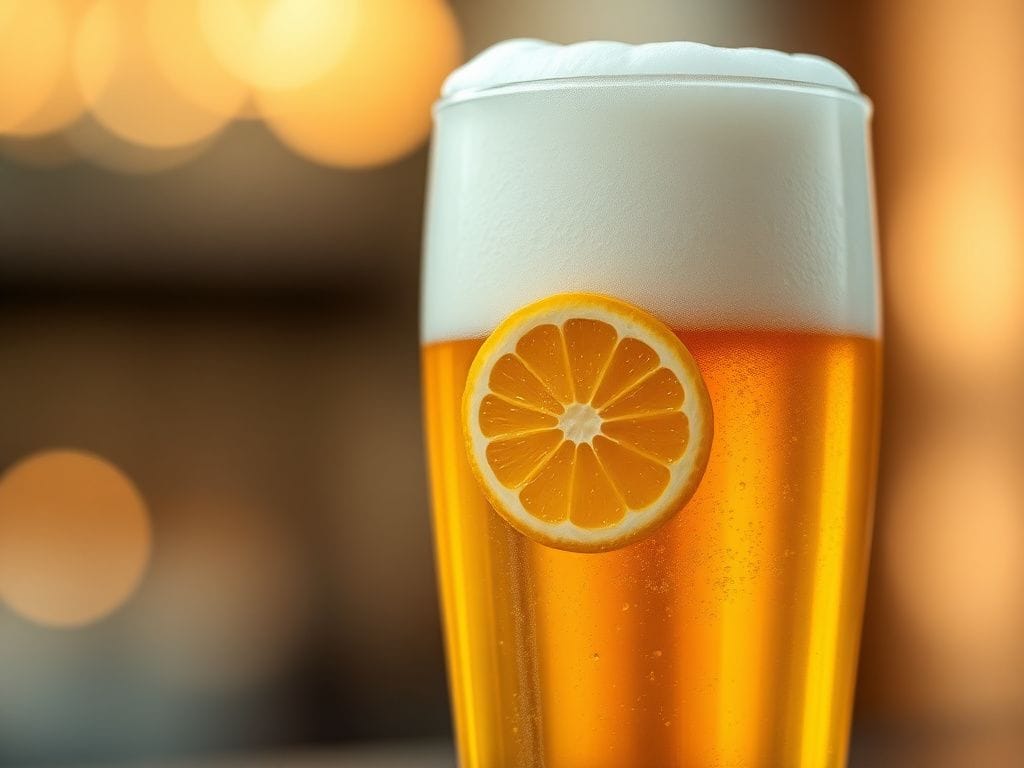
Witbier yeast is the second defining element after the spice additions. Wyeast 3944 (Belgian Witbier) and White Labs WLP400 (Belgian Wit Ale) are the traditional choices, both producing the characteristic banana and clove esters and phenols that define the style. Fermentis Safbrew WB-06 is a widely available dry option that performs well. Ferment at 68–72°F, lower temperatures (below 65°F) suppress the ester and phenol production that the style requires. Unlike some Belgian styles where fermentation temperature is a critical control variable, Witbier yeast produces appropriate character across a wider temperature range. Don’t fine or filter, the haze from unmalted wheat and yeast in suspension is traditional and expected in the style. Serve at 40–45°F in a tall Weizen glass.
Common Questions
Can I use fresh orange peel instead of dried Curaçao orange peel?
Fresh orange peel can be used, but it produces noticeably different results. Fresh sweet orange peel (the outer zest layer of a common orange) contributes fresh, bright citrus aroma that fades quickly, the volatile compounds disappear within days of fermentation. Fresh orange peel also contributes more pith bitterness risk if the inner white pith is included. Dried Curaçao orange peel (from the dried peel of the laraha citrus tree, or dried bitter orange peel available from homebrew shops) is more concentrated and stable, contributing flavor compounds that persist through fermentation and conditioning. If using fresh orange peel, add the zest of 2–3 oranges at flameout and accept that the citrus character will be more muted in the finished beer than dried peel produces. For the most authentic Witbier character, dried bitter orange peel from a homebrew shop is the better choice.