Last updated:
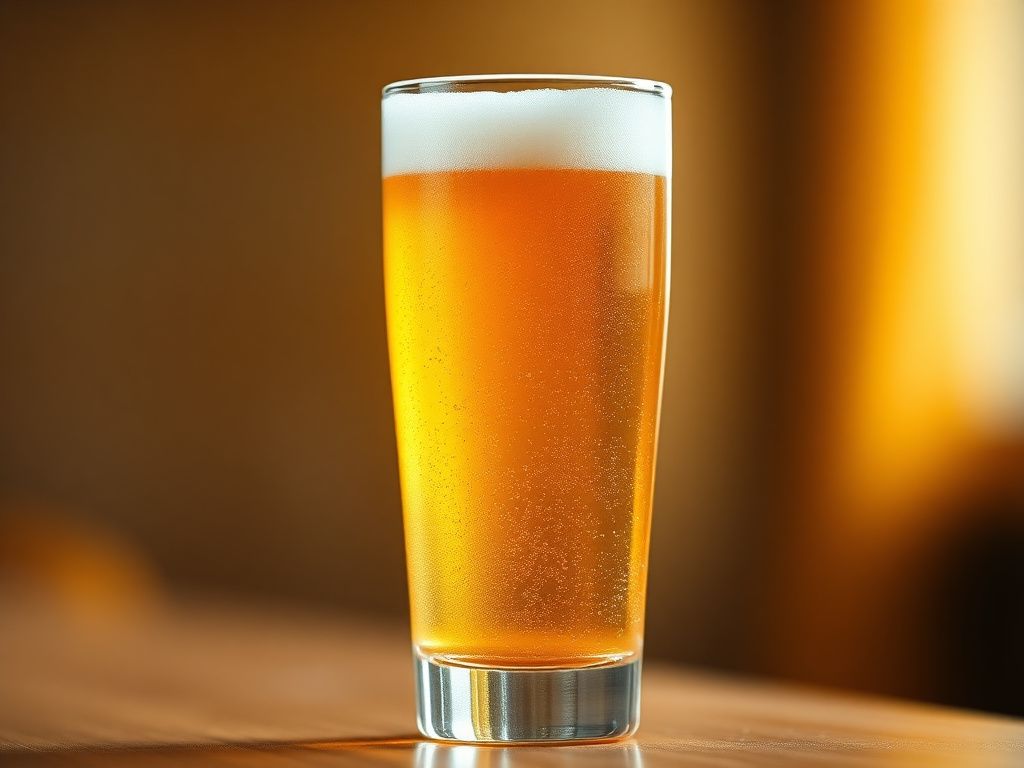
Pilsner Urquell is the original pilsner, brewed in Plzeň (Pilsen), Czech Republic since 1842, it invented the pale lager style that accounts for the majority of all beer consumed globally. Cloning it is one of the most rewarding and technically demanding lager projects a homebrewer can attempt, because the decoction mashing process, the soft Bohemian water, and the specific Saaz hop character all contribute to a result that’s genuinely different from any other Pilsner. I’ve brewed this clone many times and the decoction step is worth the effort.
Pilsner Urquell clone recipe (5 gallon / 19L batch)
Target stats: OG 1.050, FG 1.012, ABV ~5.1%, IBU 40, SRM 4–5, brilliant pale gold with characteristic slight haze. Grain bill: 10 lbs (4.54 kg) Czech floor-malted Pilsner malt (Bohemian Pilsner), the specific malt matters here. Czech floor-malted Pilsner malt (available from Weyermann, Best Malz, and others as “Bohemian Pilsner”) is undermodified relative to modern well-modified malts and contains more protein, this is why Pilsner Urquell benefits from and virtually requires the protein rest and decoction mashing to achieve full conversion. It produces the characteristic doughy, slightly grainy malt sweetness unique to Czech Pilsner. Do not substitute German or Belgian Pilsner malt, the result will be cleaner but less authentic. Hops: 2.0 oz Czech Saaz whole hops (60 min), 28 IBU. 1.0 oz Czech Saaz (30 min), 10 IBU. 1.0 oz Czech Saaz (5 min), 5 IBU. Total IBU: approximately 40–42. Czech Saaz specifically and in whole cone form if possible, Saaz’s spicy, herbal, slightly earthy character is the defining hop signature of Pilsner Urquell. Pellet Saaz is acceptable but produces slightly less aromatic complexity in the late additions. Yeast: White Labs WLP800 Pilsner Lager Yeast (derived from Urquell’s production yeast) or Wyeast 2001 Urquell Lager (explicitly named after the commercial beer). Both are more accurate than generic German lager strains, WLP800/2001 produce a slightly more rounded, less sulfurous fermentation character appropriate for Czech Pilsner versus Bavarian lager. Water, the most critical single variable: Plzeň’s water is among the softest naturally occurring brewing waters in the world, extremely low mineral content (calcium ~7 ppm, sulfate ~6 ppm, chloride ~5 ppm, bicarbonate ~15 ppm). Use RO water with minimal mineral additions, target: calcium 10–20 ppm maximum, sulfate 10 ppm, chloride 10 ppm. Any significant mineral content, particularly sulfate, fundamentally changes the malt character and bitterness perception. The soft water allows the Saaz bitterness to be firm but round rather than sharp or harsh. This is the most important water chemistry adjustment in the recipe; hard tap water makes a completely different beer. Process, triple decoction (authentic) or simplified approach: Authentic triple decoction: 1) Protein rest 50°C (122°F) for 20 min → pull thick decoction, boil for 15 min, return → raise to 63°C (145°F). 2) Pull thin decoction, boil 10 min, return → raise to 70°C (158°F). 3) Pull thin decoction, boil 10 min, return → raise to 76°C (169°F) mash out. The decoction process produces melanoidins (Maillard reaction products from boiling the mash) that create the characteristic slightly toasty, round malt character specific to Czech Pilsner. Simplified single-infusion alternative: mash at 65°C (149°F) for 90 minutes, produces an acceptable but less complex result; the toasty malt depth is reduced. 90-minute boil. Ferment at 9°C (48°F) for 2–3 weeks. Diacetyl rest at 17°C (63°F) for 48 hours. Lager at 2°C (35°F) for 8–10 weeks minimum. Carbonate to 2.5 volumes CO2.
Common Questions
Is decoction mashing necessary for an authentic Pilsner Urquell clone?
Decoction mashing produces a noticeably more authentic Pilsner Urquell clone character than single infusion mashing, but it is not strictly necessary to produce an excellent Czech Pilsner. The decoction’s contribution: boiling portions of the mash creates melanoidin compounds through Maillard reactions at temperatures above 100°C (212°F), these compounds produce the characteristic round, slightly toasty, rich malt complexity that Pilsner Urquell has and that a single-infusion lager with the same grain bill lacks. The flavor difference between a decocted and non-decocted Pilsner Urquell clone using Czech floor-malted Pilsner malt is real and detectable in a side-by-side comparison. However: a single-infusion Pilsner Urquell clone with correct Czech malt, correct Saaz hops, very soft water, and adequate lagering time produces a beer that most drinkers would identify as Czech Pilsner and find excellent. The decoction is the authentic technique and produces the most accurate clone; single infusion is the practical approach that still produces a very good result. If you have never done a decoction mash: Pilsner Urquell is the recipe worth learning it for, the technique is not difficult, only time-consuming (add approximately 2 hours to your brew day for a triple decoction), and the difference in the finished beer is significant enough to justify it for a batch intended to closely replicate the original. If you want decoction character without full decoction: adding 10–15% melanoidin malt to a single-infusion mash adds some of the malt depth without the process complexity, though the character is different from true decoction melanoidins.