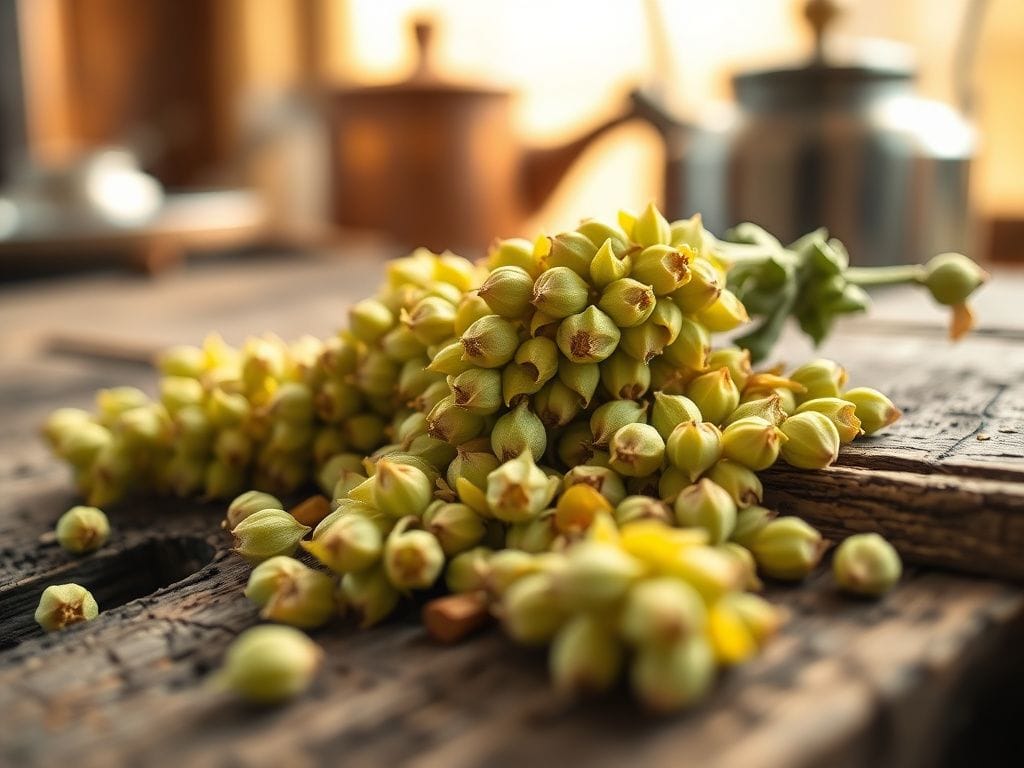
Exploring native hops like Medusa and the diverse Neomexicanus category unveils a spectrum of complex, often unexpected aromas and flavors. Medusa, with its unique cannabis, guava, and apricot notes, typically presents low alpha acids, making it ideal for late-boil and dry-hop additions. Neomexicanus varieties, encompassing a range of wild American hops, offer everything from pineapple and coconut to spearmint and dill, demanding careful extraction to highlight their delicate, terroir-driven profiles without over-bittering.
| Hop Variety | Alpha Acid Range (%) | Beta Acid Range (%) | Co-Humulone (% of Alpha) | Total Oil Range (mL/100g) | Dominant Oils & Aromas |
|---|---|---|---|---|---|
| Medusa (USDA 19058M) | 4.0 – 6.0 | 6.0 – 8.0 | 28 – 35 | 1.5 – 2.5 | Guava, Apricot, Melon, Citrus, Dank, Cannabis |
| Neomexicanus (General) | 3.0 – 7.0 (highly variable) | 4.0 – 8.0 (highly variable) | 20 – 35 (variable) | 1.0 – 3.0 (highly variable) | Pineapple, Coconut, Spearmint, Dill, Lemon Zest, Stone Fruit, Woody, Resinous |
When I first ventured into the world of native American hop varieties, I admit, I was skeptical. My experience was deeply rooted in the classic European noble hops and the robust C-hops of the Pacific Northwest. The idea of hops growing wild in the mountains of New Mexico or the valleys of the Rockies, presenting entirely different aromatic profiles, felt almost alien. My initial mistake, and one I see many homebrewers make, was to treat Medusa or any Neomexicanus variety like a high-alpha IPA hop. I boiled them vigorously, expecting a punch, and instead, I got a muddled bitterness devoid of their delicate, captivating character. It was a harsh lesson in understanding the unique chemistry and optimal usage of these truly special plants. It taught me that sometimes, less aggression yields more beauty, and patience reveals the true essence of the ingredients. Now, I approach them with reverence, aiming to coax out their nuanced flavors rather than bludgeon them into submission. This approach is what I want to share with you today.
The Math: Unlocking Native Hop Potential
Working with native hops, especially those with lower alpha acid percentages, requires a slightly different approach to your calculations. My focus shifts from maximizing IBU extraction in the boil to optimizing the preservation and extraction of delicate essential oils during the whirlpool and dry hop stages. This isn’t about brute force; it’s about precision.
Manual Calculation Guide: Hop Oil Concentration for Dry Hopping
For native hops, the total oil content is often a more critical metric than alpha acids for late additions. I aim for a target oil concentration in the finished beer to achieve the desired aroma and flavor intensity. Here’s my method:
- Determine Target Total Oil Concentration: Based on sensory goals. For subtle aroma, I aim for 0.5-1.0 mL/L; for intense aroma, 1.5-3.0 mL/L. For a beer with Neomexicanus, I often target 1.25 mL/L as a starting point.
- Calculate Hop Oil Contribution:
- Measure the total oil content of your specific hop lot (given in mL/100g, often on the packaging or spec sheet). For Medusa, let’s assume 1.8 mL/100g.
- Convert beer volume to liters. For a 19 L (5-gallon) batch, that’s 19 L.
- Desired Total Oil (mL) = Target Total Oil Concentration (mL/L) * Beer Volume (L)
- Required Hop Weight (g) = (Desired Total Oil (mL) / Hop Total Oil Content (mL/100g)) * 100
- Consider Extraction Efficiency: Not all oils are extracted during dry hopping. I typically use an estimated extraction efficiency of 25-40% for dry hopping, depending on temperature and contact time. For native hops, I lean towards the lower end (around 30%) to account for delicate compounds.
Example Calculation for a 19 L (5-gallon) batch, targeting 1.25 mL/L total oil from Medusa (1.8 mL/100g total oil), with 30% extraction efficiency:
| Parameter | Value |
|---|---|
| Beer Volume (L) | 19 L |
| Target Total Oil Concentration (mL/L) | 1.25 mL/L |
| Medusa Total Oil Content (mL/100g) | 1.8 mL/100g |
| Dry Hop Extraction Efficiency (%) | 30% (0.30) |
| Calculated Desired Total Oil (mL) | 1.25 mL/L * 19 L = 23.75 mL |
| Calculated Required Hop Weight (g, theoretical) | (23.75 mL / 1.8 mL/100g) * 100 = 1319.4 g |
| Adjusted Required Hop Weight (g, with efficiency) | 1319.4 g / 0.30 = 4398 g |
Note: This example highlights the massive quantities needed to hit high oil concentrations with lower-oil hops and lower extraction efficiency, often leading to multiple dry hop additions. This is why native hops are often used for nuance rather than outright oil saturation. For practical purposes, I’d scale this back or use a blend. For typical brewing, a more common dry hop rate for these hops might be 5-10 g/L (1-2 oz/gallon) for a pronounced aroma without excessive vegetal notes.
Step-by-Step Execution: Brewing with Medusa and Neomexicanus
Brewing with native hops demands precision and a gentle hand. My goal is always to showcase their unique profiles, not to overpower them. Here’s my typical process:
1. Malt Bill & Fermentability
- Keep it Clean: I often use a very simple base malt bill to let the hops shine. **90-95% Pilsner or Pale Malt**, with 5-10% White Wheat or Vienna Malt for body and head retention. For Medusa, a touch of rye can complement its dankness.
- Target Original Gravity (OG): I aim for a moderate OG, typically **1.048-1.058**, ensuring the beer isn’t too heavy or too light.
- Mash Schedule: I conduct a single infusion mash at **65.5°C (150°F)** for 60 minutes. This ensures good fermentability (target Final Gravity (FG) **1.010-1.012**) while leaving enough residual body to support the hop character.
2. Water Profile
- Soft & Balanced: I prefer a soft water profile with low mineral content. Aim for **Ca: 50-70 ppm**, **Mg: 5-10 ppm**, **Na: <20 ppm**.
- Chloride-Sulfate Ratio: A slightly chloride-forward or balanced profile (**Cl: 80-120 ppm, SO4: 50-80 ppm**) helps support mouthfeel and rounds out hop character without enhancing harsh bitterness, which is crucial for these delicate hops. I’ve found high sulfates can clash with some of the more herbal Neomexicanus notes.
3. Boil Additions
- Minimal Bittering: For bittering, I often use a small addition of a neutral, clean bittering hop (e.g., Magnum or Warrior) at 60 minutes, targeting a modest **10-15 IBU**. This provides a clean canvas.
- Late Boil Additions (10-5 minutes): This is where Medusa and Neomexicanus begin their work. I add a modest amount, maybe **1.5-2.0 g/L (0.2-0.25 oz/gallon)**, in the last 10 minutes of the boil. This extracts some flavor compounds without excessive volatilization.
4. Whirlpool Parameters
- Crucial for Aroma: This is the prime time for native hop extraction. I cool the wort to **80-85°C (176-185°F)** immediately after flameout.
- Dosage: I typically add **3-5 g/L (0.4-0.6 oz/gallon)** of Medusa or Neomexicanus at this temperature.
- Contact Time: A **30-45 minute** whirlpool stand is usually sufficient to extract desirable oils without isomerizing too many alpha acids into harsh bitterness.
5. Fermentation
- Clean Yeast: I always opt for a clean-fermenting American Ale yeast (e.g., WLP001, US-05). These strains don’t produce strong esters or phenols that would compete with the nuanced hop aromas.
- Temperature Control: Ferment at the lower end of the yeast’s recommended range, typically **18-20°C (64-68°F)**. This minimizes off-flavors and preserves delicate hop compounds.
6. Dry Hopping
- Controlled Environment: I often conduct two dry hop additions. The first is typically around **2-3 g/L (0.25-0.35 oz/gallon)** at the tail end of fermentation, usually when the gravity has dropped to **1.015-1.012**. This allows for some biotransformation.
- Second Dry Hop: The second, larger addition of **4-6 g/L (0.5-0.75 oz/gallon)** is performed cold, at **10-12°C (50-54°F)**, after fermentation is complete. This preserves the most volatile and delicate oils.
- Contact Time: Each dry hop addition typically lasts **2-4 days**. Longer periods risk vegetal notes, especially with high hop loads.
7. Packaging
- Oxygen Purging: These delicate hop compounds are highly susceptible to oxidation. I meticulously purge all transfer lines, kegs, and bottles with CO2.
- Cold Crashing: A thorough cold crash at **0-2°C (32-36°F)** for **48-72 hours** helps settle hop particulate, improving clarity and preventing hop creep.
Troubleshooting: What Can Go Wrong
My journey with native hops hasn’t been without its bumps. Here are some common issues I’ve encountered and how I’ve learned to mitigate them:
- Muted Hop Character:
- Cause: Too low a hop charge, excessive boil time for aroma hops, or poor whirlpool technique (too hot, too short). High fermentation temperatures can also scrub delicate aromas.
- Fix: Increase whirlpool and dry hop rates. Ensure whirlpool temperature is below 85°C. Ferment cleanly and cold crash effectively to drop yeast and hop particles. Consider a second, colder dry hop.
- Grassy/Vegetal Notes:
- Cause: Over-dry hopping (too much contact time or too high a concentration), or using very old/oxidized hops.
- Fix: Reduce dry hop contact time to 2-4 days. Use fresh hops from reliable sources. If brewing a large batch, consider splitting the dry hop addition into two stages, removing the first batch of hops before adding the second.
- Lack of Bitterness (when trying to bitter):
- Cause: Underestimating the low alpha acid content of native hops and not accounting for utilization.
- Fix: Use a small, clean bittering addition of a high-alpha hop at 60 minutes to establish a bitterness base. Reserve native hops primarily for flavor and aroma additions in the whirlpool and dry hop.
- Unpleasant Herbaceous/Dill Notes (especially with some Neomexicanus):
- Cause: This can be an inherent characteristic of some Neomexicanus varieties, or it can be exacerbated by overly aggressive extraction.
- Fix: Experiment with smaller additions. Reduce whirlpool temperature slightly to **75-80°C (167-176°F)**. Consider blending with other hop varieties that offer complementary fruit or citrus notes to balance the profile.
- Oxidation and Hop Creep:
- Cause: Exposure to oxygen during transfers or packaging, or prolonged contact with dry hops after fermentation, leading to enzymatic activity.
- Fix: Maintain strict oxygen exclusion throughout the cold side. Purge all vessels, use closed transfers. Cold crash effectively and package promptly after dry hopping to minimize hop contact time with the beer post-fermentation. You can find more details on mitigating oxidation at BrewMyBeer.online.
Sensory Analysis: The Native Hop Experience
This is where native hops truly shine and differentiate themselves from their more commercially cultivated cousins. My experience has shown me that patience and a clean base beer allow these nuanced profiles to sing.
Medusa (USDA 19058M)
- Appearance: Typically presents as a pale to golden straw color, often with a slight haze if dry-hopped heavily. My preferred pour is usually brilliant, achieved through careful cold crashing and fining.
- Aroma: This hop is a chameleon. I get dominant notes of **guava, ripe apricot, and a distinct melon sweetness**, often intertwined with a captivating **dank, almost cannabis-like earthiness**. There’s frequently a layer of bright citrus zest underneath, particularly grapefruit.
- Mouthfeel: Smooth, medium-light body with a soft bitterness that doesn’t linger. The hop oils contribute a pleasant creaminess without being heavy.
- Flavor: The flavor mirrors the aroma, with a juicy fruit medley of **guava, cantaloupe, and stone fruit**. The dank quality translates into a subtle, earthy undertone rather than an overt bitterness. I’ve also picked up hints of green tea and white pepper in beers where Medusa is prominent.
Neomexicanus Varieties (General Profile)
Given the vast diversity within Neomexicanus, this is a more generalized description based on my various experiences. Each specific sub-variety will have its own quirks.
- Appearance: Similar to Medusa, usually pale to golden, often with a slight haze if extensively dry-hopped.
- Aroma: This is where the wildness truly comes alive. I’ve encountered everything from bright, tropical **pineapple and coconut (often reminiscent of Sabro)** to intriguing **spearmint, eucalyptus, and herbaceous dill**. Some varieties offer a delicate **lemon zest or lime peel**, while others lean into **woody, resinous, or even forest floor** characteristics. It’s a sensory adventure with each new varietal.
- Mouthfeel: Generally soft and clean, often with a delicate effervescence that highlights the complex aromatics. Some varieties can impart a subtle, almost creamy texture.
- Flavor: The flavor profile is incredibly diverse. I’ve tasted **wild berry notes, subtle pineapple, light coconut milk, and a clean, refreshing herbal quality**. The bitterness is almost always soft and clean, allowing the unique flavor compounds to take center stage. I’ve occasionally noted a slight earthy minerality that speaks to their wild origins.
FAQs
Why are native hops often lower in alpha acids?
My understanding is that native hops like Medusa and the various Neomexicanus varieties evolved in specific ecological niches without the selective breeding pressure for high alpha acids that commercial brewing imposed. Their survival and propagation didn’t depend on producing compounds for beer bittering, but rather for pest resistance and environmental adaptation, leading to unique oil profiles instead. Their primary value lies in their diverse aromatic compounds, not their bittering potential.
Can I use Medusa/Neomexicanus for bittering?
While technically you *can* use them for bittering, it’s generally not my recommended approach. Their low alpha acid content means you’d need massive quantities for significant IBUs, which can lead to vegetal flavors and waste their precious, delicate aroma oils. I prefer to use a neutral, high-alpha hop for bittering, typically aiming for no more than **15-20 IBU** from a dedicated bittering addition, and then layer in Medusa or Neomexicanus exclusively for flavor and aroma in the whirlpool and dry hop. This preserves their unique character.
What yeast strains pair best with these hops?
To truly showcase the nuanced profiles of native hops, I always opt for clean, neutral fermenting ale yeast strains. My go-to choices include **California Ale Yeast (WLP001/US-05), Conan/Vermont Ale Yeast (WLP041/OYL-006)**, or even a very clean lager yeast if I’m going for an American Light Lager or Pilsner expression. The goal is to avoid any yeast-derived esters or phenols that could compete with or mask the delicate hop aromas. A neutral fermentation at **18-20°C (64-68°F)** is key to letting the hops speak for themselves. You can find more specific yeast pairing advice on BrewMyBeer.online.
What beer styles benefit most from native hops?
Native hops excel in styles where delicate aroma and flavor are prized over aggressive bitterness. I’ve had incredible success using Medusa and various Neomexicanus varieties in:
- Pale Ales & IPAs: Especially New England IPAs or hazy pale ales, where their tropical and dank notes can shine without harsh bitterness.
- Lagers & Pilsners: A touch in the whirlpool or a very light dry hop can add a fascinating complexity to crisp lagers.
- Saison/Farmhouse Ales: Certain Neomexicanus varieties with spicy or herbal notes can beautifully complement the esters of a Saison yeast.
- Experimental & Hybrid Styles: This is where I truly love to play, pushing the boundaries and seeing how these unique hops interact with different malt bills and fermentation profiles.
Ultimately, any beer where you want to introduce a distinctive, nuanced, and often exotic hop character without overwhelming bitterness is a candidate for these native gems.