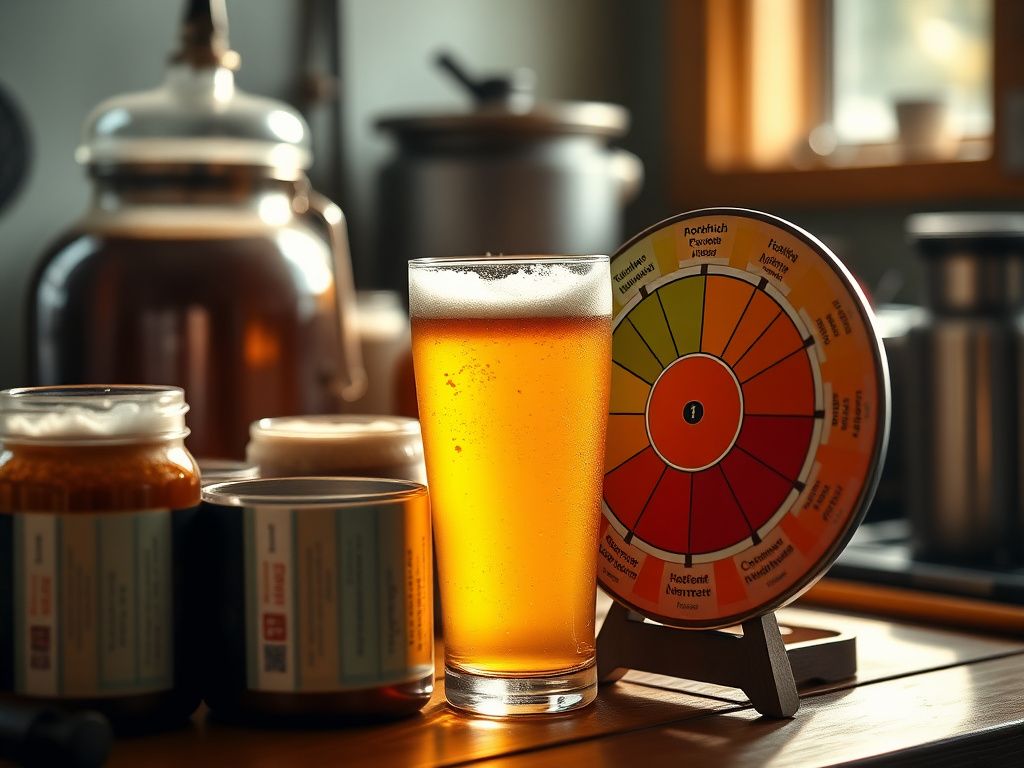
I’ve found that diagnosing off-flavors in beer can be a daunting task, even for experienced brewers. However, with the right tools and techniques, it’s possible to identify and troubleshoot issues that can make or break a brew. One of the most powerful tools in my arsenal is the Beer Aroma Wheel, a diagnostic aid that helps me pinpoint flavor issues and get to the root of the problem. In this article, I’ll share my expertise on how to diagnose off-flavors with the Beer Aroma Wheel, a technique that has saved me from countless batches of undrinkable beer.
As a brewer, I’ve spent countless hours perfecting my craft, but even with the best techniques and ingredients, off-flavors can still occur. That’s where the Beer Aroma Wheel comes in – a circular diagram that categorizes different aromas and flavors, making it easier to identify and describe the issues in my beer. By understanding how to use the Beer Aroma Wheel, I’ve been able to diagnose and fix problems that would have otherwise gone undetected, resulting in better-tasting beer and a more efficient brewing process.
Understanding the Beer Aroma Wheel: A Diagnostic Tool
The Beer Aroma Wheel is a comprehensive tool that was first developed by Dr. Morten Meilgaard, a renowned brewing expert. The wheel is divided into 12 main categories, each representing a different group of aromas and flavors, such as fruity, floral, and hoppy. Within each category, there are numerous sub-descriptors that help to further pinpoint the specific character of the aroma or flavor. By using the Beer Aroma Wheel, I can quickly and accurately identify the off-flavors in my beer, which is essential for making adjustments and improving the overall quality of my brews.
One of the key benefits of the Beer Aroma Wheel is its ability to provide a common language for brewers to describe and communicate about off-flavors. By using a standardized set of descriptors, I can easily share my findings with other brewers and get feedback on how to address the issues. This collaborative approach has been invaluable in helping me refine my brewing techniques and produce better-tasting beer. Whether I’m brewing a classic style or experimenting with new ingredients, the Beer Aroma Wheel is an essential tool that helps me achieve my goals.
Identifying Common Off-Flavors in Beer Using the Aroma Wheel
Using the Beer Aroma Wheel, I’ve identified several common off-flavors that can occur in beer, including diacetyl, dimethyl sulfide (DMS), and phenolic compounds. Diacetyl, for example, is a buttery or butterscotch-like flavor that can result from yeast autolysis or bacterial contamination. By referencing the Beer Aroma Wheel, I can quickly determine if diacetyl is present in my beer and take steps to address the issue, such as adjusting my fermentation temperature or sanitizing my equipment.
| Off-Flavor | Description | Possible Cause |
|---|---|---|
| Diacetyl | Buttery or butterscotch-like flavor | Yeast autolysis or bacterial contamination |
| Dimethyl Sulfide (DMS) | Cooked corn or vegetable-like flavor | Insufficient boil time or poor fermentation practices |
| Phenolic Compounds | Medicinal or band-aid-like flavor | Wild yeast or bacterial contamination |
By understanding the common off-flavors that can occur in beer and how to identify them using the Beer Aroma Wheel, I can take a proactive approach to preventing issues and producing high-quality brews. Whether I’m brewing a lager, ale, or sour beer, the Beer Aroma Wheel is an essential tool that helps me achieve my goals and produce beer that I’m proud to share with others.
How to Use the Beer Aroma Wheel to Pinpoint Flavor Issues
To use the Beer Aroma Wheel, I start by smelling my beer and taking note of the aromas that I detect. I then reference the wheel to determine which category and sub-descriptor best match the aromas I’ve identified. For example, if I detect a fruity aroma, I might reference the “Fruity” category on the wheel and determine if the aroma is more specifically “citrusy,” “tropical,” or “stone fruit-like.” By using this process, I can quickly and accurately identify the flavor issues in my beer and take steps to address them.
In addition to identifying off-flavors, the Beer Aroma Wheel can also be used to evaluate the overall character of my beer. By referencing the wheel, I can determine if my beer is balanced, complex, and true to style, or if it needs adjustments to achieve the desired flavor profile. This process has been invaluable in helping me refine my brewing techniques and produce beer that is consistently high in quality.
The Role of Descriptors in Diagnosing Off-Flavors with the Aroma Wheel
Descriptors play a critical role in diagnosing off-flavors with the Beer Aroma Wheel. By using a standardized set of descriptors, I can accurately communicate about the flavor issues in my beer and get feedback from other brewers. The descriptors on the Beer Aroma Wheel are carefully chosen to be specific, yet broad enough to encompass a range of flavors and aromas. For example, the “Fruity” category includes descriptors such as “apple,” “berry,” and “citrus,” which allow me to pinpoint the specific type of fruitiness I’m detecting in my beer.
In addition to the Beer Aroma Wheel, I also use a diagnostic decision tree to help identify the root causes of off-flavors in my beer. The decision tree is a flowchart that guides me through a series of questions and tests to determine the underlying cause of the issue. By using the decision tree in conjunction with the Beer Aroma Wheel, I can quickly and accurately identify the root causes of off-flavors and take steps to prevent them in the future.
| Root Cause | Description | Possible Solution |
|---|---|---|
| Yeast Autolysis | Yeast cells breaking down and releasing off-flavors | Adjust fermentation temperature, use yeast nutrients |
| Bacterial Contamination | Unwanted bacteria growing in the beer | Sanitize equipment, use antibiotics |
| Insufficient Boil Time | Boil time too short, resulting in off-flavors | Increase boil time, monitor gravity readings |
Troubleshooting Brewing Techniques with the Beer Aroma Wheel
Troubleshooting brewing techniques is an essential part of producing high-quality beer, and the Beer Aroma Wheel is a valuable tool in this process. By using the wheel to identify off-flavors and referencing the diagnostic decision tree to determine the root causes, I can quickly and accurately identify issues with my brewing techniques and make adjustments to prevent them in the future. For example, if I detect a diacetyl flavor in my beer, I might reference the decision tree and determine that the issue is due to yeast autolysis. I can then adjust my fermentation temperature and use yeast nutrients to prevent the issue from occurring again.
In addition to troubleshooting brewing techniques, the Beer Aroma Wheel can also be used to evaluate the overall quality of my beer. By referencing the wheel and using the diagnostic decision tree, I can determine if my beer is meeting my quality standards and make adjustments as needed. This process has been invaluable in helping me refine my brewing techniques and produce beer that is consistently high in quality.
Advanced Off-Flavor Diagnosis: Combining the Aroma Wheel with Sensory Evaluation
Advanced off-flavor diagnosis involves combining the Beer Aroma Wheel with sensory evaluation to identify and troubleshoot complex flavor issues. By using the wheel to identify off-flavors and sensory evaluation to assess the overall character of my beer, I can gain a deeper understanding of the flavor issues and develop targeted solutions to address them. For example, if I detect a phenolic flavor in my beer, I might use sensory evaluation to determine if the flavor is due to wild yeast or bacterial contamination. I can then reference the Beer Aroma Wheel and the diagnostic decision tree to determine the root cause of the issue and develop a plan to prevent it in the future.
In addition to the Beer Aroma Wheel and sensory evaluation, I also use a prevention checklist to help prevent off-flavors from occurring in my beer. The prevention checklist includes items such as sanitizing equipment, monitoring fermentation temperature, and using high-quality ingredients. By following the prevention checklist and using the Beer Aroma Wheel and sensory evaluation to troubleshoot issues, I can produce high-quality beer that is consistently free of off-flavors.
- Sanitize equipment regularly
- Monitor fermentation temperature and adjust as needed
- Use high-quality ingredients and follow proper brewing techniques
- Reference the Beer Aroma Wheel and diagnostic decision tree to troubleshoot issues
- Use sensory evaluation to assess the overall character of your beer
Common Questions
Q: What is the Beer Aroma Wheel and how does it work?
A: The Beer Aroma Wheel is a diagnostic tool that helps brewers identify and describe off-flavors in their beer. It works by categorizing different aromas and flavors into 12 main categories, each with numerous sub-descriptors. By referencing the wheel, brewers can quickly and accurately identify off-flavors and take steps to address them.
Q: How do I use the Beer Aroma Wheel to diagnose off-flavors in my beer?
A: To use the Beer Aroma Wheel, start by smelling your beer and taking note of the aromas that you detect. Reference the wheel to determine which category and sub-descriptor best match the aromas you’ve identified. Use the diagnostic decision tree to determine the root cause of the issue and develop a plan to prevent it in the future.
Q: What are some common off-flavors that can occur in beer and how can I prevent them?
A: Common off-flavors that can occur in beer include diacetyl, dimethyl sulfide (DMS), and phenolic compounds. To prevent these off-flavors, follow proper brewing techniques, sanitize equipment regularly, and monitor fermentation temperature. Reference the Beer Aroma Wheel and diagnostic decision tree to troubleshoot issues and develop targeted solutions to address them.
Q: Can I use the Beer Aroma Wheel to evaluate the overall quality of my beer?
A: Yes, the Beer Aroma Wheel can be used to evaluate the overall quality of your beer. By referencing the wheel and using sensory evaluation, you can determine if your beer is meeting your quality standards and make adjustments as needed. The Beer Aroma Wheel is a valuable tool for any brewer looking to produce high-quality beer that is consistently free of off-flavors.
Q: How can I combine the Beer Aroma Wheel with sensory evaluation to diagnose complex flavor issues?
A: To combine the Beer Aroma Wheel with sensory evaluation, start by using the wheel to identify off-flavors in your beer. Then, use sensory evaluation to assess the overall character of your beer and determine if the off-flavors are due to a specific issue, such as wild yeast or bacterial contamination. Reference the diagnostic decision tree to determine the root cause of the issue and develop a plan to prevent it in the future. By combining the Beer Aroma Wheel with sensory evaluation, you can gain a deeper understanding of the flavor issues in your beer and develop targeted solutions to address them.